Introducing Traceable Alpaca™

Don't just wear it, know it. Trace your garment to the exact coordinates where your fiber was sourced.

Steps to you

See how we transform alpaca fibers straight from the animal to make your favorite Paka products. From the Andes to you.

01
Alpacas roam free

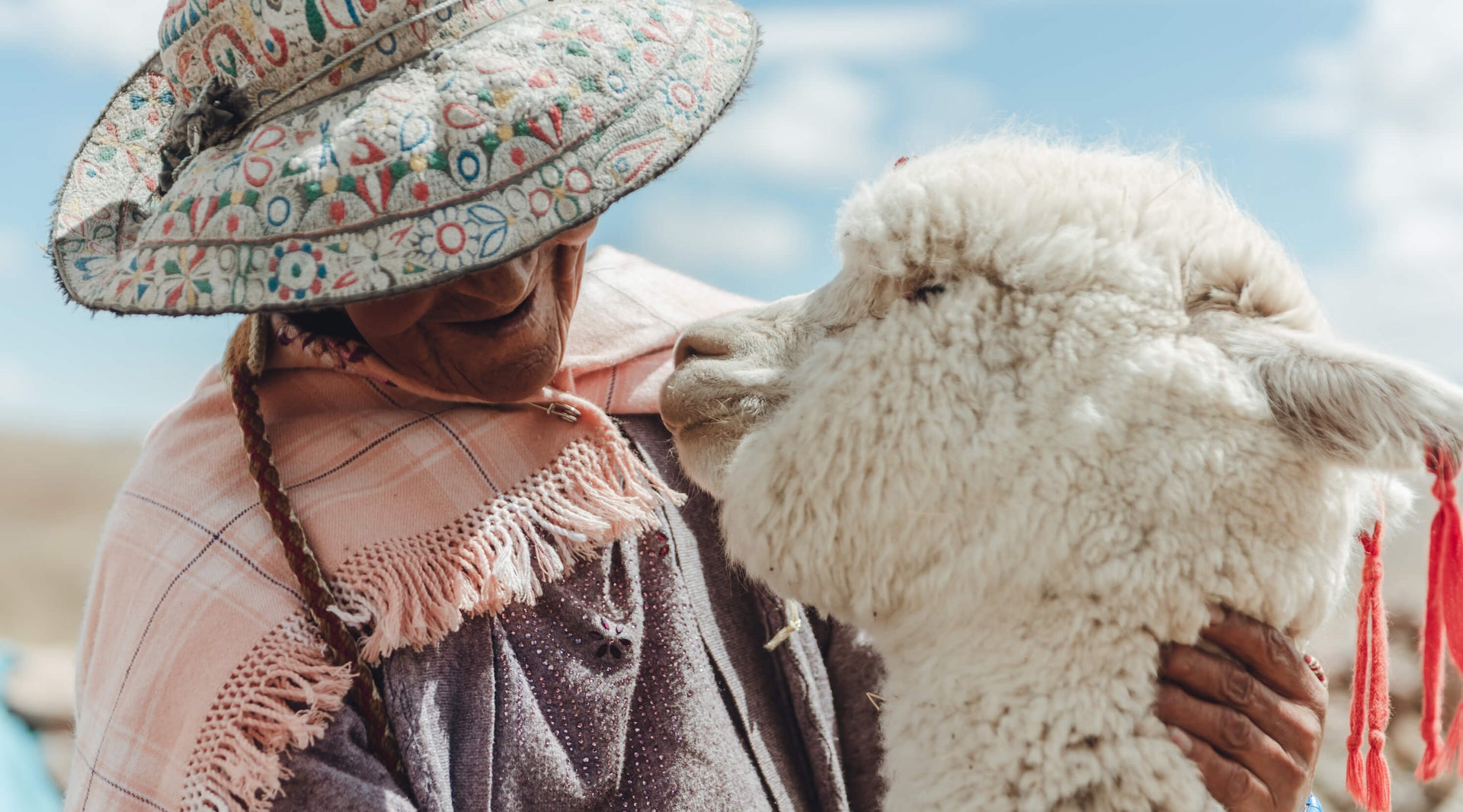
The Andes Mountains have been home to alpacas for millions of years. They live alongside Peruvian families (called ‘alpaqueros’). Each herd contains only 60-90 alpacas and is cared for by a single family. Farms are scattered throughout the Andean Highlands; most can only be reached by horse.

02
Farmers shear the alpacas

Shearing is an ancient and essential practice to maintain the alpaca’s health and hygiene. If the fleece grows beyond one year, the animals are at risk of overheating, becoming immobilized, susceptible to predation, and developing parasitic infections around the breech. It also makes for some of the best sweaters in the world.

03
The fiber is collected and separated by micron count (by hand)

Incredibly, each fiber is hand sorted by women specially trained to differentiate the micron diameters - the thinner the fiber, the softer the fabric. That’s why we use Royal Alpaca in the majority of our garments (17-19 microns). This kinetic knowledge has been passed down through generations.

04
The fiber is dyed and spun into yarn

Once sorted and washed to remove any dirt, the fibers are colored with environmentally-friendly dyes (OEKO TEX + GOTS certified). In some cases, we don’t use any dyes and rely solely on the natural hues from the alpacas. After dyeing, the fiber goes through a carding machine and is spun into different yarns, all depending on the final product.

05
The yarn is knit into your sweater

We work with our team of Peruvian artisans on each design. The fabric is crafted using specialized knitting equipment and panels are sewn together to create a flexible dynamic sweater.

06
A unique handwoven Inca ID crafted in Chincherois is added to each sweater

Weaving at CTTC sustains the livelihoods of over 300 Quechua women, providing fair wages while preserving centuries-old craftsmanship—and resulting in textiles that carry both tradition and purpose.

07
From the Andes to you, fully traceable

What you hold in your hands is no longer just a sweater, but the living result of generations of knowledge, millions of years of evolution, and the meaningful co-existence between the land, farmers, and alpacas in Peru. 

08
What comes next

Through our partnership with AIA, 1% of sales support regenerative agriculture and alpaca families. Another 1% funds the education of Peruvian young women through Peruvian Hearts. The story of your sweater and impact is truly just beginning.

Dozens of alpacas roaming free in the Andes mountains
Alpaca's shearing process
A quechua woman's hands holding the alpaca fiber
The alpaca fiber is spun into yarn
A peruvian woman hand knitting a sweater
A woman's hands weaving a bracelet with an ancestral tool
A light grey alpaca hoodie with a tag that says "scan to see exactly where this Hoodie came from in Peru" It also includes a QR code
Two men hugging in the Peruvian highlands

Traceable Alpaca

Orders include a source certificate from our partners in Peru that make full traceability possible.

Enjoy the journey.

Traceable Alpaca Logo

Shop Traceable Alpaca™